
What is Digital Marketing?
In today’s fast-paced world, almost everything we do has moved online — from shopping and learning to entertainment and socializing. Businesses too have shifted their focus to the digital space to connect with customers. This is where digital marketing comes in.
Digital marketing is the promotion of products or services using digital platforms such as search engines, social media, email, mobile apps, and websites. Unlike traditional marketing methods like TV ads, billboards, or newspapers, digital marketing allows businesses to reach a global audience in real-time and measure results instantly.
Channels of Digital Marketing
Search Engine Optimization (SEO):
Optimizing your website to rank higher on Google and other search engines so that people can find you when they search for relevant terms.
Content Marketing:
Creating and sharing valuable content (blogs, videos, infographics, etc.) to attract and engage your target audience.
Social Media Marketing:
Promoting products and building brand awareness through platforms like Facebook, Instagram, LinkedIn, and Twitter.
Pay-Per-Click Advertising (PPC):
Paid ads on platforms like Google Ads or social media where you pay only when someone clicks on your ad.
Email Marketing:
Sending personalized emails to nurture leads, share updates, or promote offers directly to customers.
Affiliate & Influencer Marketing:
Partnering with influencers or affiliates who promote your products to their audience in exchange for a commission.
Why is Digital Marketing Important?
Wider Reach: You can connect with customers across the globe.
Cost-Effective: More affordable than traditional marketing.
Measurable Results: Tools like Google Analytics help you track performance in real-time.
Better Targeting: You can focus on specific demographics, interests, and behaviors.
24/7 Availability: Your business is visible online anytime, anywhere.
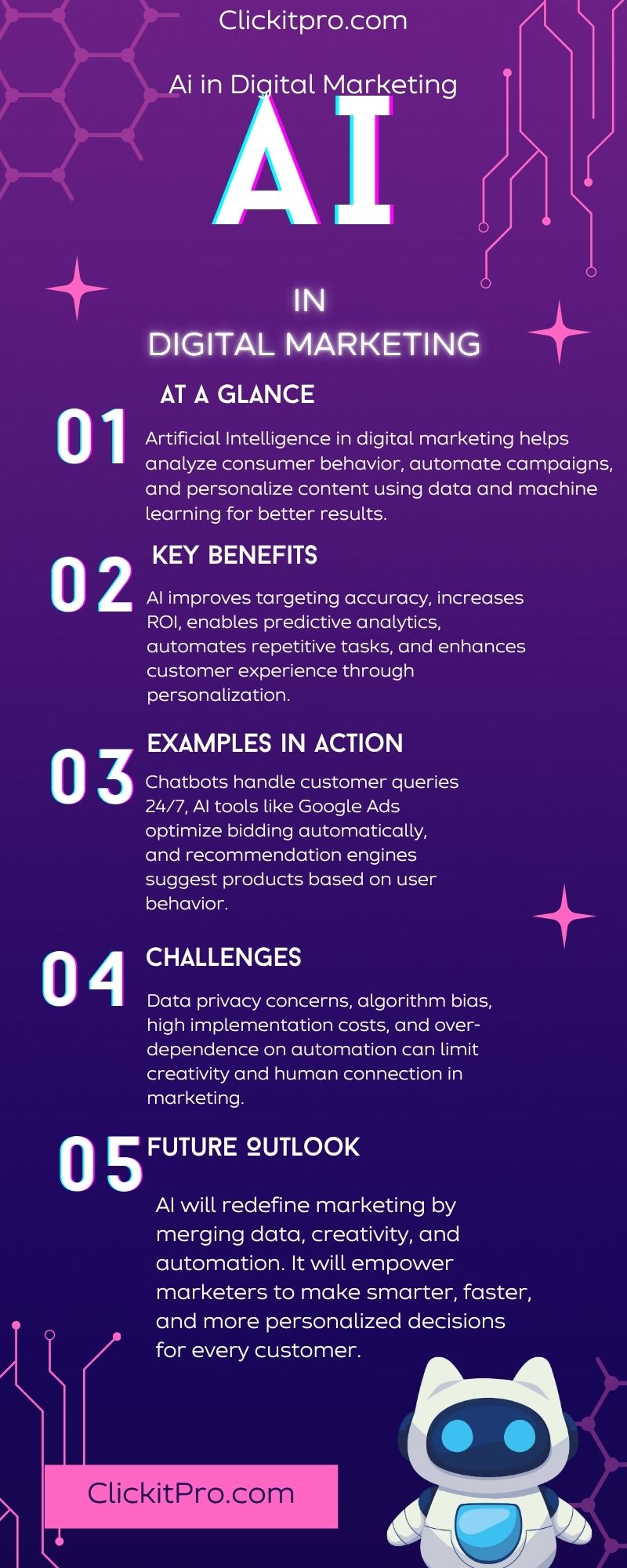
AI in Digital Marketing: Transforming the Future

In the modern world of online marketing, AI, or Artificial Intelligence, is playing an enormous part. Companies, large or small, are employing the tools of AI to make their jobs swifter and easier. With ChatGPT, for example, and Canva AI, content, social media, and advertisements are created instantly without taking hours. With AI, personalization in marketing also becomes easier by recognizing the behavior of customers, presenting each individual with content and products that he or she is most likely to enjoy. Advertising campaigns have also gotten smarter, with the help of AI identifying the right crowds and saving both money and time. Today, the business that neglects to involve itself with AI will fall behind. Tomorrow’s online marketing future lies clearly with AI, but the wise use thereof will keep the businesses ahead.